Bloons TD 6 NETFLIX
Netflix, Inc.Strategy
4.65.95K Reviews
- Version
- 56.3
- Installs
- 5.00M
- Age Rating
- Everyone
Screenshots
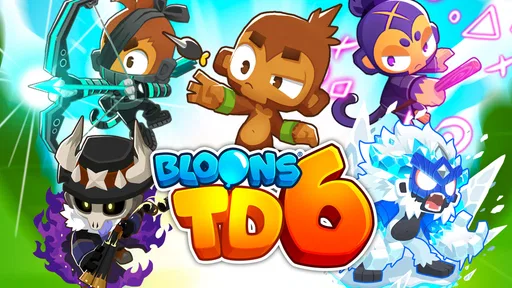
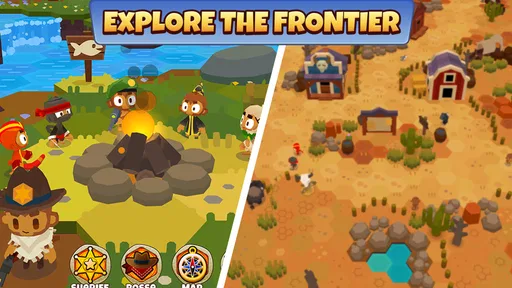

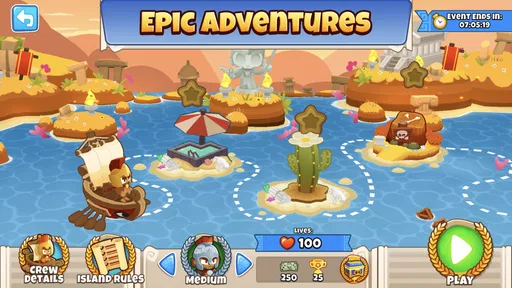
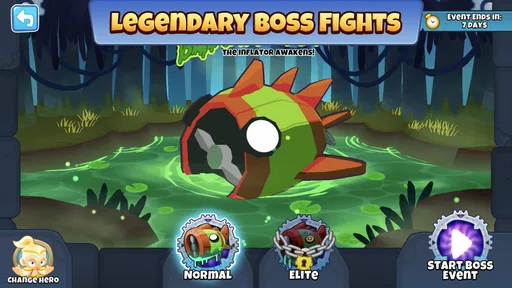
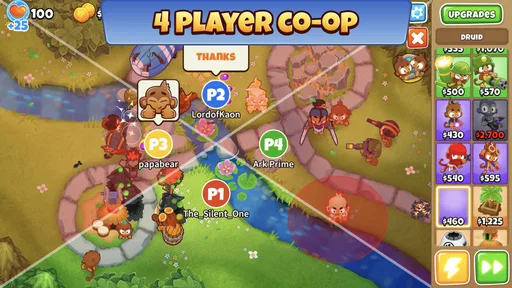
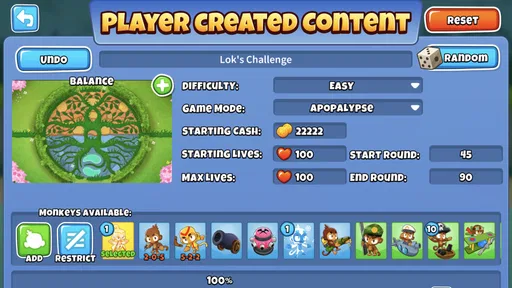
Our Review of Bloons TD 6 NETFLIX
 Analysis by Appyee
I spent time with Bloons TD 6 NETFLIX as a strategy game rather than treating it like a quick arcade distraction, and that distinction matters. Its simple premise—placing monkeys to stop balloons—quickly becomes a careful exercise in range, timing, upgrades, and preparation. A good round is not just about reacting when a lane becomes crowded; it is about building a defense that can handle what is coming several rounds later.
The game is free, carries an Everyone age rating, and comes from Netflix, Inc. It has built a strong audience on mobile, with an average rating of 4.6 from around 81 thousand ratings and more than 5 million installs. Those figures match my impression: this is a polished, substantial tower-defense game with enough depth to keep a curious player busy long after the first few maps.
How I approach a normal match
My usual workflow starts with reading the map before spending anything. The shape of the track changes the value of every tower. A bend or loop can let one well-placed monkey attack the same balloons repeatedly, while a straight section may reward range, slowing effects, or a tower that covers several lanes. I try not to fill the first available space simply because it is available.
Early rounds are useful preparation time. I place a reliable starting tower, watch how much cash arrives, and decide whether the map calls for a compact core or several smaller defenses. The important habit is leaving room for towers whose range or upgrade path will matter later. A crowded opening can feel strong and still become awkward when a support tower or high-impact attacker has nowhere sensible to go.
I also avoid upgrading automatically after every round. Saving for a meaningful upgrade often works better than spreading small improvements across several monkeys. That does not mean one tower should carry the entire match, because different balloon properties demand different answers. It means I want each purchase to solve a recognizable problem: insufficient popping power, poor coverage, weak control, or a dangerous late-round leak.
During a round, I watch where the defense actually struggles instead of relying only on the end-of-round result. Balloons may survive because the front line lacks damage, because the back section is exposed, or because a group moves through too quickly for the current attack pattern. Identifying that difference helps me spend with purpose. A stronger tower is not always the right answer if the real issue is placement or coverage.
This makes the game a good fit for short sessions that can become longer ones. I can play a few rounds while waiting for something, but a serious attempt deserves attention because a small mistake in the opening can create an expensive recovery problem later. The pause between rounds is especially useful for reviewing the board, checking available upgrades, and deciding whether to reinforce or save.
Settings I check before settling in
I recommend looking through the available settings before starting a demanding run. On a phone, visual clarity matters more than it first appears. A busy battlefield can make it harder to identify which balloons are getting through, where a tower’s range ends, and whether an upgrade has changed the shape of your defense. I prefer a presentation that keeps the track and important effects easy to read rather than one that makes every action look dramatic.
Sound is another practical choice. Audio can make a long session more enjoyable, but I often lower it when I am playing in public or switching between the game and another task. The game remains understandable through its visual feedback, although turning sound down can make me more deliberate about watching the battlefield instead of relying on alerts.
Touch controls deserve a little adjustment in your habits even if there is no special control trick to learn. I place towers with a clear view of the track and avoid tapping repeatedly in a crowded area. On a smaller screen, the difference between selecting a tower and selecting empty ground can become annoying when the board is busy. I make important purchases during calm moments, not while a difficult wave is already moving through the defense.
Performance can also influence how I play. More towers, projectiles, and effects make the battlefield harder to read, especially during intense rounds. If the action becomes visually overwhelming, I find it better to simplify my attention: follow the balloons most likely to cause a leak, then inspect the rest of the board once the immediate danger passes. This is less glamorous than watching every effect, but it leads to better decisions.
The current version is 56.3, and the game requires Android 9 or later when played on Android. That makes it worth checking device compatibility before planning to use an older handset as a dedicated game device. On a supported phone, the main concern is not learning a complicated interface; it is keeping enough screen awareness to manage a defense that gradually becomes dense.
Repeatable patterns that make rounds easier
The most useful improvement I made was replacing improvisation with repeatable opening patterns. I do not copy one fixed build onto every map, because the track layout changes the answer. Instead, I use a simple sequence: establish dependable early popping, identify the best central coverage point, reserve space for a specialist response, and only then expand into expensive upgrades.
This approach prevents a common beginner mistake: buying several towers that all perform the same job. A group of similar attackers can look impressive against ordinary balloons, yet leave the defense helpless when a different property or movement pattern appears. I get better results by asking what the current group cannot handle and choosing the next tower around that weakness.
Placement is often more valuable than an immediate upgrade. If a tower can see a longer section of track, attack around a bend, or cover a point where balloons pass more than once, its existing attacks may produce more value without any change to its level. I regularly test whether moving a tower would improve its opportunities before spending money to compensate for a poor position.
Another strong habit is separating emergency money from planned money. I keep enough available to respond when a wave exposes a weakness instead of spending every coin as soon as it appears. This can feel inefficient during easy rounds, but it protects the run from a sudden leak. The trade-off is that saving slows visible growth, so I use it most when I know the next section is likely to test the defense.
I also review the board after a successful difficult round. Winning does not prove that the layout is efficient. Perhaps one tower barely carried the defense, perhaps a back section contributed very little, or perhaps the solution worked only because the timing was favorable. Looking at what actually dealt with the threat helps me repeat the useful part and remove the expensive clutter.
For a realistic everyday example, imagine playing during a commute with only a limited amount of attention. I would choose a familiar map, build a conservative opening, and pause before any major purchase. I would not attempt an experimental strategy while distracted, because recovering from a weak placement requires more concentration than starting carefully. The game works well in that situation when I treat it as a sequence of small decisions, not as something to leave running unattended.
Where experienced play meets the game’s limits
The deeper I go, the more I notice that difficulty comes from managing trade-offs rather than from a lack of available options. Stronger upgrades usually cost more, occupy valuable space, or arrive too late to solve an immediate problem. A defense can be powerful in theory and still fail because it was developed in the wrong order.
I sometimes build around one especially effective idea and then discover that it has made the rest of the board too dependent on a single tower. That is the point where flexibility matters more than raw strength. A backup does not need to duplicate the main attacker; it should cover the failure that would otherwise end the run. This is particularly important on maps where the track gives balloons several chances to expose a weak section.
There is also a limit to how much planning can replace observation. A strategy copied from one map may be inefficient on another, and a build that succeeds at one difficulty may not leave enough room for adjustment at a tougher setting. I would rather understand why a tower belongs in a position than memorize a sequence of taps. That knowledge transfers better and makes mistakes easier to diagnose.
New players should expect some trial and error. The game explains its central idea quickly, but understanding the practical value of every upgrade takes longer. Some choices are immediately satisfying because they increase visible damage; others are valuable because they improve control, coverage, or consistency. If you only judge a purchase by how dramatic its attack looks, you may overlook the upgrade that makes the whole defense more stable.
That learning curve is the main reason I would not recommend it to someone seeking a completely passive or story-driven experience. Bloons TD 6 asks you to think about economy, board space, timing, and threat recognition. Players who want a very short match with no long-term planning may find the later complexity tiring. Likewise, if you dislike repeating a map to refine a strategy, the game’s trial-and-adjust rhythm may feel like work instead of play.
Compared with simpler tower-defense alternatives, this one offers more room for specialization and experimentation, but it also demands more attention. Compared with strategy games built around long campaigns or large armies, it is more focused: the battlefield is compact, and decisions arrive through the relationship between towers and the balloon path rather than through broad map management. I prefer it when I want tactical concentration without committing to a huge strategy interface.
The mobile format is a strength, but it shapes the experience. A touch screen makes placing towers feel direct, while a small display can make a crowded late round less comfortable than it would be on a larger screen. I would choose a tablet or larger phone for extended sessions if available, especially when I am learning a difficult map. For quick practice, a regular phone is perfectly workable as long as I avoid rushed taps.
One useful discipline is to treat losses as information rather than immediately restarting with the same plan. I ask which round exposed the weakness, whether the problem began with placement or spending, and whether I had a response available but used it too late. This turns a failed run into a testable adjustment. It also keeps the game from becoming a frustrating cycle of guessing.
Who should play it and who should look elsewhere
I would recommend this game to anyone who enjoys watching a plan develop and then adjusting it under pressure. It suits players who like optimizing a route, comparing the value of upgrades, and finding a cleaner solution after a messy first attempt. It is also approachable for families because the age rating is Everyone and the basic goal is easy to understand, even though mastering the strategy takes considerably longer.
It is a particularly good choice for someone moving from casual puzzle games into strategy. The game presents decisions in a readable physical space: place something here, protect that corner, save for a stronger response, and observe the result. That makes abstract ideas such as opportunity cost and defensive specialization easier to feel in practice.
I would skip it if your priority is a quiet game that can be ignored while you do something else. The early rounds may allow relaxed play, but later decisions reward active observation. I would also look at a simpler tower-defense game if you want a short, fixed progression with little experimentation. Here, the satisfaction comes partly from learning the system and refining habits, not just from reaching the end of a level.
Because it is free, the initial barrier is low, and the large player base makes it easier to find advice or discuss strategies outside the game. Still, I would not let the rating alone decide whether it suits you. A 4.6 average from around 81 thousand ratings shows broad approval, but the more important question is whether you enjoy its particular mix of planning, repetition, and quick correction.
My verdict after building better habits
Bloons TD 6 NETFLIX works because its cheerful presentation hides a genuinely demanding strategy layer. I can begin with a few straightforward placements, yet the game keeps asking better questions: Is this tower in the best position? Am I saving enough? What kind of threat is approaching? Does my defense have a backup plan, or am I hoping one strong idea will carry everything?
My strongest recommendation is to play deliberately. Check the settings for comfortable visibility and sound, study the track before spending, keep some money available for surprises, and treat placement as seriously as upgrades. Those habits make the game feel less random and reveal why experienced players can produce much stronger results with what appears to be the same set of tools.
There are limits: crowded rounds can challenge phone-sized screens, the learning curve is real, and players who dislike repeating attempts may lose patience. Even so, I think the balance is excellent for a strategy game. It gives beginners a clear starting point while leaving experienced players plenty of room to refine timing, economy, and layout.
For me, the best reason to install it is not simply that monkeys pop balloons. It is that every successful defense feels earned through a chain of small, visible decisions. If you enjoy improving a plan one round at a time, this is one of the most satisfying strategy games I have played on mobile.
Verdict
Strengths of Bloons TD 6 NETFLIX
- Deep tower-defense strategy with varied maps, towers, heroes, and upgrade paths.
- Regular content updates add new challenges, events, and gameplay variety.
- Offline play is available, making it convenient for travel or limited connectivity.
- Netflix membership includes the full game without separate ads or in-app purchases.
- Co-op mode lets friends team up and combine different tower strategies.
Limitations of Bloons TD 6 NETFLIX
- Requires an active Netflix subscription to access and play the game.
- The large number of towers and upgrades can feel overwhelming for new players.
- Later rounds can become lengthy, demanding significant time for a single session.
- Some advanced maps and modes require considerable practice to complete successfully.
- Performance may drop on older devices during rounds with many bloons and effects.
Other Releases by Netflix, Inc.
View All
Netflix
Entertainment4.8

Sonic Mania Plus - NETFLIX
Action4.5

Football Manager 26 Mobile
Sports4.3

Toca Boca Hair Salon 4 NETFLIX
Educational4.5
Similar Picks in This Category
View All
Clash of Clans
Supercell4.5

Plants vs. Zombies™
ELECTRONIC ARTS3.7

Lords Mobile: Kingdom Wars
IGG.COM4.5

Clash Royale
Supercell4.4

State.io — Conquer the World
CASUAL AZUR GAMES4.1

Car Driving School : Car Games
Spark Game Studios3.9
Frequently Asked Questions
What is Bloons TD 6 NETFLIX?
Bloons TD 6 NETFLIX is the Netflix edition of the popular tower defense game Bloons TD 6. You defend your territory from waves of colorful bloons by placing and upgrading monkey towers, activating powerful abilities, and adapting your strategy to different maps. This version includes the core game experience and is intended for Netflix subscribers rather than standard one-time purchase access.
Do I need a Netflix subscription to play Bloons TD 6 NETFLIX?
Yes. Bloons TD 6 NETFLIX is offered as part of the Netflix Games catalog, so an active Netflix membership is generally required to download and play it. You normally sign in with your Netflix account through the app. The game does not typically require separate in-game purchases, but availability can depend on your country, subscription status, device compatibility, and Netflix’s current games offering.
Does Bloons TD 6 NETFLIX include the same content as the regular version?
The Netflix edition is designed to provide the main Bloons TD 6 experience, including tower upgrades, challenging maps, different game modes, heroes, and long-term progression. However, updates, features, and online functionality may not always arrive at exactly the same time as in versions distributed through other stores. Players should also check the app listing for current content and platform-specific differences before downloading.
Can I play Bloons TD 6 NETFLIX offline?
Bloons TD 6 NETFLIX supports playing many of its tower defense activities without a continuous internet connection, which is useful during travel or when mobile data is unavailable. However, you may need to connect periodically for account verification, updates, cloud-related features, or certain online modes. Offline progress and synchronization can also depend on your device, so connecting occasionally is recommended.
Is Bloons TD 6 NETFLIX suitable for beginners and children?
Bloons TD 6 NETFLIX is approachable for beginners because early maps introduce tower placement, upgrades, bloon types, and hero abilities gradually. At the same time, later rounds become strategically demanding and require careful resource management. The colorful cartoon presentation is family-friendly, but parents should remember that access depends on a Netflix account and that online or social features may require additional supervision.
Play our best games!


